
Dopamine
The dopamine model attributes the symptoms of schizophrenia to a hyperactive dopaminergic transduction system in the brain.
Reward
Dopamine is a neurotransmitter that acts in a number of different pathways in the central nervous system.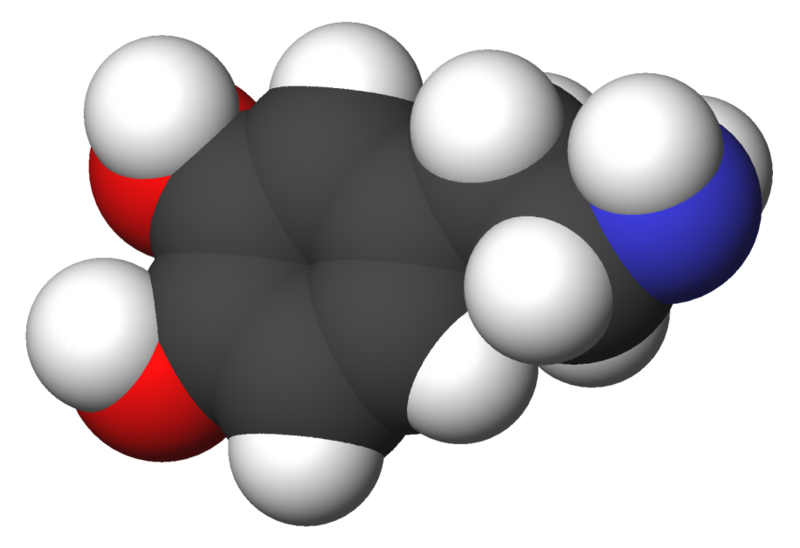
- There are eight pathways in total, but the two that are thought to be involved in the symptoms of schizophrenia are the mesolimbic and mesocortical pathways.
- These are involved in the reward system, which functions to regulate behaviour by inducing a feeling of pleasure. This concept is based upon reinforcement; if an act or behaviour causes a sensation of pleasure, learning will be induced and the frequency or intensity of the same behaviour will increase.
- The dopamine pathways concerned with schizophrenia reward behaviours such as sex, eating food, or drinking water.
The Hypothesis
The dopamine hypothesis of schizophrenia suggests that increased level of the neurotransmitter or it’s receptor in the reward pathways underlie the disease. This includes:
- an increase in DA (dopaminergic) transmission in the mesolimbic system inducing positive symptoms, and
- decreased DA transmission in the mesocortical system leading to the negative symptoms of schizophrenia.
Schizophrenia
As described above, in schizophrenia the dopamine model suggests that too much dopamine is acting upon the reward system in the brain; this works the following way.
- Dopamine acts on D2 receptors, which are G-protein coupled receptors (depicted below) of the Gαi subtype present in many locations in the brain.
- When activated by dopamine, the G protein subunit dissociates and inhibits the activity of adenylyl cyclise, a lyase enzyme which in turn reduces the production of cAMP.
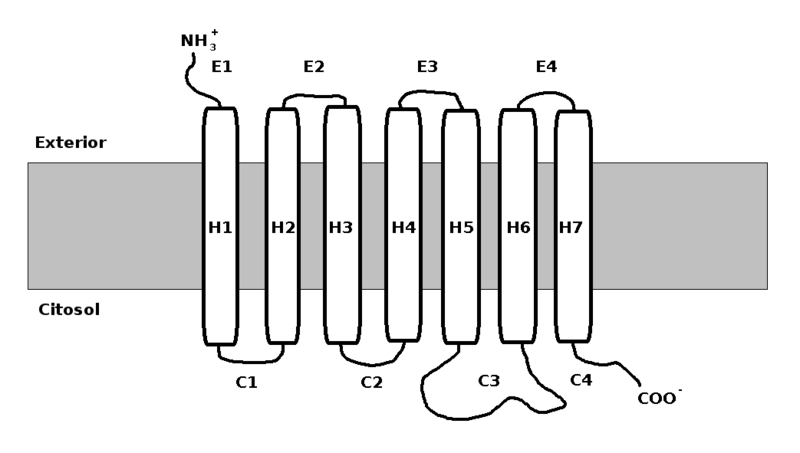
- When activated by dopamine, the G protein subunit dissociates and inhibits the activity of adenylyl cyclise, a lyase enzyme which in turn reduces the production of cAMP.
- Transient and acute results of the decrease in concentration of this intracellular messenger can cause the sensations attributed to street drugs such as cocaine, including euphoria, overconfidence and alertness (features of the reward system discussed above). This is achieved by effective blockade of the DAT dopamine transporter which usually mediates reuptake to the presynapse from the synaptic cleft, causing receptors to be flooded with the neurotransmitter.
- Chronic effects of hyperactive signalling on the other hand can cause the symptoms associated with schizophrenia.
Neuronal Calcium Sensor-1
The fact that acute effects display features perhaps more closely associated with mania (i.e. euphoria, overconfidence etc.) indicates that there may be other factors involved with the disorder. Indeed, recent research has revealed an interaction between a member of the DRIP (Dopamine Receptor-Interacting Proteins) family of proteins called NCS-1 (Neuronal Calcium Sensor-1). This neuronal protein had been shown to be present in the frontal cortex of schizophrenia patients with an increase of 50% in concentration when compared to unaffected individuals and interacts strongly with the D2 receptor. Relative to schizophrenia, NCS-1 has an interesting set of characteristics that may contribute to the symptoms observed; it is capable of regulating certain ion channels, mediating neuronal survival and altering synaptic plasticity over short-term periods.
- There is evidence to suggest that NCS-1 can attenuate D2 receptor internalisation by reducing the inherent activity of GRKs (G protein-coupled Receptor Kinases), which are normally responsible for phosphorylation of the activated receptor and consequent desensitisation.
- Serine and threonine residues on the D2 receptor are phosphorylated by GRKs and act as binding sites for a member of the arrestin family of proteins.
- Arrestin prevents normal function of the receptor by blocking interaction with G proteins and by serving as an adaptor protein for clathrin-dependent endocytosis machinery, normally causing internalisation of these receptors that are necessary of dopamine neurotransmission.
- The fact that NCS-1 appears to down-regulate internalisation of the D2 receptor indicates that higher levels of NCS-1 may confer an over-excitability of dopaminergic transmission. This is reinforced by the greater levels of NCS-1 in patients with schizophrenia.
Antipsychotics
The theory that dopamine hyperactivity is an explanation for the symptoms of schizophrenia is based mostly on evidence showing that many antipsychotic drugs (capable of relieving the characteristics of the disorder) have antagonistic effects to dopamine. Phenothiazines are a group of organic compounds which form the basis of many neuroleptic drugs and upon administration to patients produce an effective reduction of positive symptoms. Indeed, patients being treated for Parkinson’s disease with L-DOPA (discussed further in the "Dopamine & The Brain" section on the right) may experience side-effects that mimic schizophrenia.
GPCR image courtesy of Wikimedia Commons at https://commons.wikimedia.org/wiki/File:GPCR.png
Dopamine image courtesy of Wikimedia Commons at https://commons.wikimedia.org/wiki/File:Dopamine-3d-CPK.png