
Causes
The causes of schizophrenia have always been a subject of much debate. Studies conducted over the last few decades have implicated a number of different contributing factors for the disorder, from genetics and prenatal development to early environment and neurobiology.
Most studies tend to agree that a combination of factors result in the symptoms referred to collectively as schizophrenia. This mixture of inherited and acquired characteristics is often referred to as the Stress-Vulnerability Model. Current scientific debate is often based around how much each factor contributes to the model.
Genes
- The diversity and inheritable nature of schizophrenia makes it likely that the disorder has a complex pattern of relation to different sets of genes. Individual
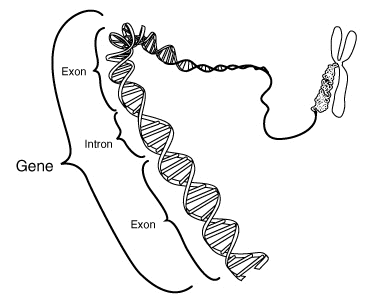 twin studies have suggested a heritability factor of up to 80%, but also as low as 11% has been reported in others.
 - It is clear that schizophrenia is not purely a case of genetic legacy, there must be other reasons behind the complex set of symptoms observed. However, follow the link at the side labelled "Statistics" to see some figures for increased risk through inheritance: there is clearly a genetic aspect to the disorder.
- Recent reviews in the field based on linkage (studies of inheritance of genetic loci or alleles) have named 14 genes as increasing the risk of diagnosis. Two genes that have been frequently implicated as contributing factors are neuregulin (NRG1, EGF family of proteins important in development of the nervous system) and dysbindin (DTNBP1, prevalent in hippocampus and cerebellum mossy fibres and axon terminals).
- Since these results were published, further studies have reported that there is in fact no association between development of schizophrenia and any of the previously implicated genes. These results were processed using thousands of SNPs (single nucleotide polymorphisms) to correlate genes between 2000 patients with schizophrenia and 2000 more unaffected individuals. The result was a distinct lack of correlation, highlighting the controversy of previous results and the uncertain nature of a genetic approach to schizophrenia.
- Another recent approach to characterise the genetic factors contributing to the development of schizophrenia has been to study the effects of rare deletions or duplications of very small stretches of DNA termed CNVs (copy number variants).
- These have been linked especially to the less common cases of schizophrenia in which there is no apparent family trait for the disorder and are formed by non-homologous recombination of regions of DNA that are sequentially similar (known as Low Copy Repeats).
- Genome-wide surveys have found CNVs in roughly 1% of all cases of schizophrenia, yet of these cases many were found to have deletions in various genes related to psychosis. Three loci were characterised in which CNVs can cause an increased risk for the development of schizophrenia in some individuals.
Altogether, these results demonstrate the diverse and controversial nature of genetic analysis of complex disorders and reflect the current disputes in the field. There is as of yet no conclusive evidence based upon exact genetic expression in patients with schizophrenia, yet it is clear from heritability studies and various correlations between gene expression and symptoms that genes play a substantial role in the development of the disorder.
Prenatal Development
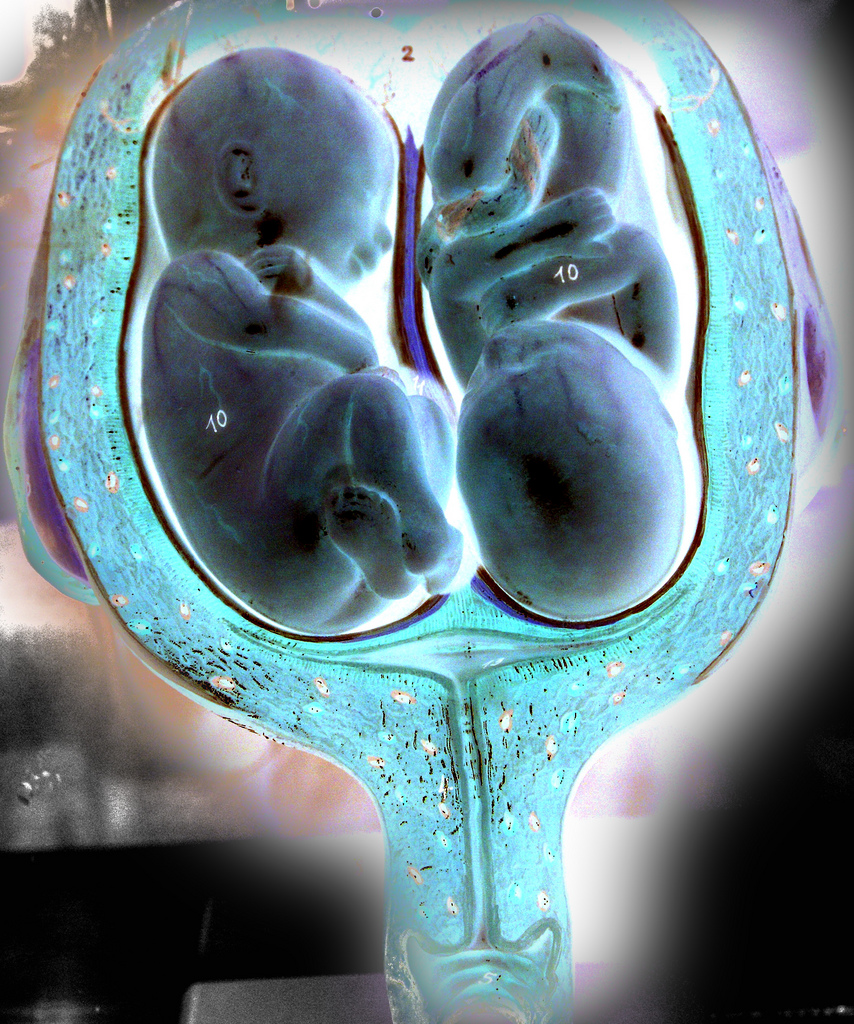 Many obstetric events have been suggested as possible factors that may contribute to the development of schizophrenia. Complications in pregnancy affect around 25% of the population and it is clear that the vast majority of these cases do not develop schizophrenia, yet there is evidence for an increased overall risk based on many different studies.
Hypoxia at or just after birth is strongly linked to the disorder and has previously been associated with a reduced hippocampal volume. It has been suggested that effects may be exerted through the regulation of genes involved in nervous system development; many of the genes implicated in schizophrenia can have altered patterns of expression due to hypoxic conditioning.
A low birth-weight has also been implicated as a contributory factor. Most complications during pregnancy can cause a low birth-weight, yet malnutrition and maternal stress seem to be most prevalent in increased risk for developing schizophrenia.
Evidence comes from studies conducted on mothers who were pregnant during famine and those who were told during pregnancy that their husbands had been killed in war (conducted during World War 2). Both higher incidences of starvation and stress correlated to a significantly higher risk of developing the disorder.
- Viral infections during pregnancy are another suggested factor. This has been discussed through the interesting observation that there is an increased risk associated with the time of year at birth (winter and spring babies are statistically more likely to develop schizophrenia), possibly linked to the higher incidence of viral infections at these times of the year.
Infections
- Influenza infection is another possible cause. Many studies, most showing a significant correlation, have characterized this viral infection as an important factor. Other infections that have been studied include polio, measles, rubella, herpes simplex and also the parasite Toxoplasama gondii. However, as has been the case with schizophrenia from the beginning of our study of the disorder, there is much controversy as to the reliability of such results and little conclusive evidence.
Drugs
There is conflicting evidence for the role of substances of abuse in either the onset or relapse of the symptoms of schizophrenia. It is difficult to study features of drug use relating to the disorder as patients may use street drugs in order to counter the negative feelings that characterise their symptoms.
- Most evidence points to cannabis use as contributory factor for schizophrenia and many studies have concluded that symptoms can be triggered by excessive use during puberty. There is now reasonably compelling evidence to suggest that smoking cannabis doubles the risk of developing the disorder and that this effect is heightened by use during adolescence; the risk can be up to six times higher in regular teenage users.
- Other drugs can mimic or worsen the symptoms of schizophrenia. Amphetamines cause the release of dopamine and thus enhance any symptoms already present, and hallucinogens have previously been used to study apparent symptoms (before any scientific difference was known).
As ever, there are no definitive answers as to whether drug use is a cause, trigger, or effect of Schizophrenia.
There is no single answer as to why any one person develops schizophrenia and another does not; as with many aspects of nature, the answers lie in a combination of different and often unrelated factors. See "Other Factors" in the menu to the right for more information.
Gene image courtesy of Flickr at https://www.flickr.com/photos/26112447@N07/2873879679/sizes/l/
Twins image courtesy of Wikimedia athttps://commons.wikimedia.org/wiki/File:Gene.png
Cannabis image courtesy of Flickr at https://www.flickr.com/photos/splifr/2958553847/sizes/o/